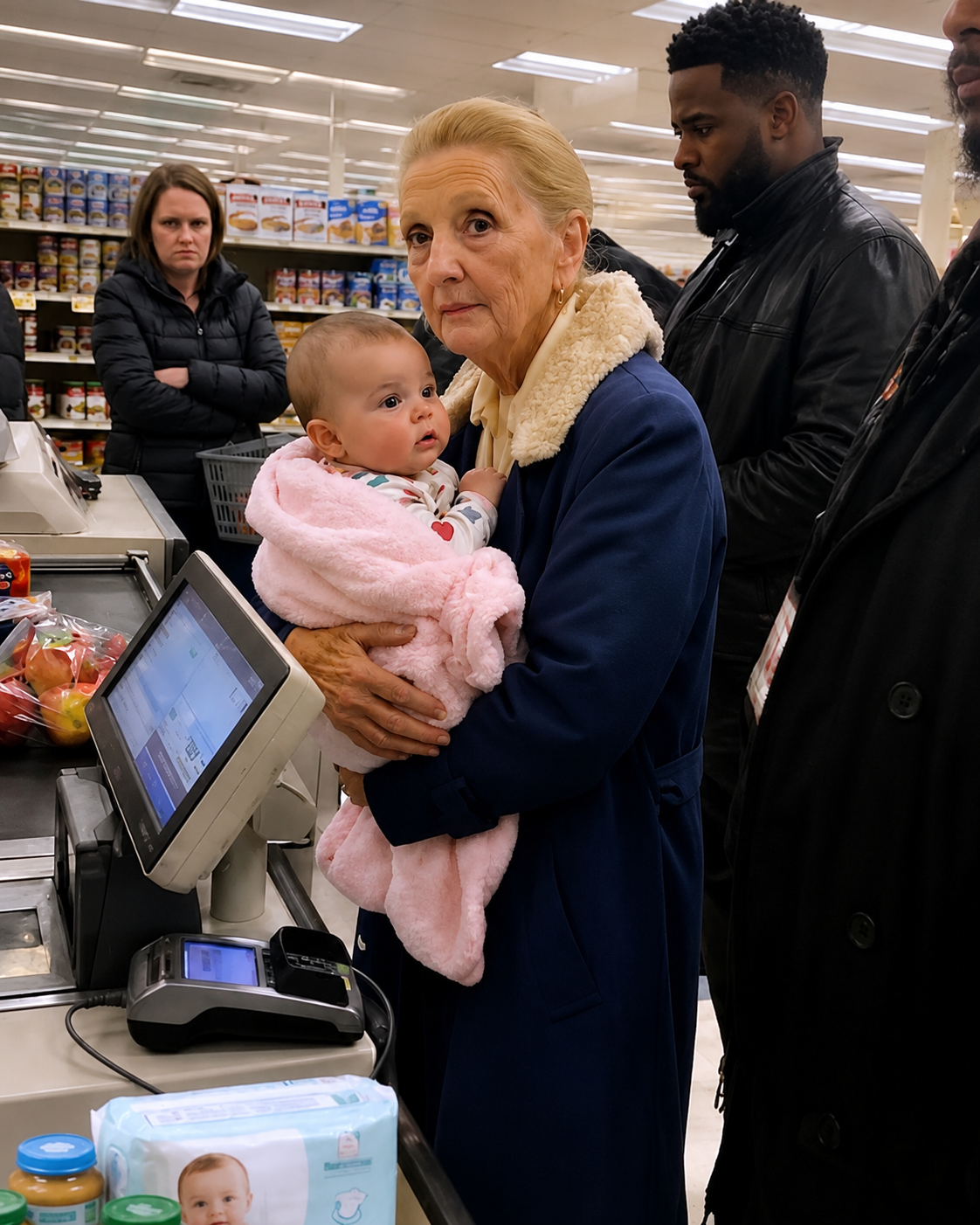
At 72 years old, I thought my days of raising babies were long behind me.
I imagined retirement would be filled with quiet mornings, gardening, church gatherings, and maybe the occasional trip with friends. Instead, I found myself waking up every few hours to feed an infant, stretching every dollar until it screamed, and wondering how I would make it through another month.
Six months earlier, my daughter Sarah walked out of my life.
At least, that’s what it felt like.
One morning, she kissed her newborn daughter on the forehead, placed her carefully in a bassinet, and told me she needed some fresh air.
I never saw her again.
The only thing she left behind was a note on the kitchen counter.
“Mom, I can’t do this. Don’t try to find me.”
I called her dozens of times.
Then hundreds.
Every call went straight to voicemail.
The police couldn’t help because she was an adult who had chosen to leave. The baby’s father wanted nothing to do with the situation either.
“You’ve got the baby,” he told me. “Figure it out.”
Then he blocked my number.
And just like that, I became Lily’s entire world.
I loved my granddaughter more than words could describe, but love doesn’t pay bills.
Every month became a balancing act.
Diapers or groceries.
Medicine or utilities.
Baby formula or something nice for myself.
The answer was always Lily.
One cold November afternoon, I bundled her into her carrier and headed to the grocery store.
We were completely out of diapers and baby food.
My bank account was running dangerously low, but I was certain there was enough to cover the essentials.
At least, I thought there was.
The store was packed.
Holiday music blasted through the speakers while shoppers rushed around with carts overflowing with Thanksgiving food.
Everyone seemed excited.
Everyone except me.
I moved through the aisles carefully, calculating every item before placing it into my cart.
A small pack of diapers.
A few jars of baby food.
One piece of turkey breast so Lily and I could still have something special on Thanksgiving.
That was all.
At the checkout line, I placed my items on the belt and swiped my card.
Declined.
My heart skipped.
There had to be a mistake.
I tried again.
Declined.
Heat rushed to my face.
The cashier looked uncomfortable.
“Maybe try one more time?” I asked quietly.
Behind me, someone groaned loudly.
“Oh, come on. Some of us have places to be.”
A few people chuckled.
I tried again.
Declined.
This time my hands started shaking.
Lily began crying inside her carrier, sensing my stress.
I bounced her gently.
“It’s okay, sweetheart,” I whispered. “Grandma will figure it out.”
Then another voice joined in.
“Maybe people shouldn’t have children they can’t afford.”
The comment hit me like a slap.
A woman farther back laughed.
“Exactly. If you can’t pay for it, don’t put it in your cart.”
Several people smirked.
No one defended me.
No one told them to stop.
I felt smaller with every passing second.
My vision blurred with tears as I emptied my purse onto the counter.
A few crumpled bills.
Loose change.
Just eight dollars.
I swallowed hard.
“Could you just ring up the baby food?” I asked the cashier. “That’s all I really need.”
The humiliation was unbearable.
Then I heard a man’s voice behind me.
“Ma’am. You with the baby.”
My stomach tightened.
I thought another insult was coming.
Slowly, I turned around.
Instead of mockery, I saw kindness.
The man looked to be in his mid-thirties, dressed in a dark coat and business attire.
His expression was gentle.
“Please don’t be embarrassed,” he said.
Before I could answer, he stepped forward.
“Cancel the transaction and scan everything again.”
The cashier blinked.
“What?”
“Everything,” the man repeated.
Then he tapped his card against the payment machine.
Approved.
Just like that.
The entire bill was paid.
A stunned silence spread through the checkout line.
Then someone muttered sarcastically, “What are you, some kind of hero?”
The stranger turned toward the crowd.
His calm expression never changed.
“You know what’s sad?” he asked.
Nobody answered.
“An elderly woman is trying to buy food and diapers for a baby, and instead of helping, all of you chose to humiliate her.”
The store fell silent.
“If that was your mother standing here,” he continued, “would you want people treating her this way?”
No one spoke.
Several shoppers looked away.
Others stared at the floor.
For the first time all afternoon, I wasn’t the one feeling ashamed.
I couldn’t stop the tears.
“Thank you,” I whispered.
The man smiled.
“You don’t owe me thanks. Just take care of that little girl.”
After gathering my groceries, I waited outside for him.
When he finally emerged, I rushed over.
“Please let me repay you,” I said. “As soon as my pension deposit clears, I’ll send every cent.”
He shook his head.
“No.”
“But—”
“My mother passed away two months ago,” he said softly.
The smile faded from his face.
“You remind me of her.”
My throat tightened.
“It helps me to do something kind in her memory.”
I didn’t know what to say.
No one had shown me that much compassion in a very long time.
Then he surprised me again.
“Let me drive you home.”
Normally, I would have refused.
But I was exhausted.
And somehow, I trusted him.
His name was Michael.
During the drive, he told me about his wife and two children.
I told him about Sarah.
About the note.
About the sleepless nights.
About the fear.
He listened to every word.
When I finished, he was quiet for a moment.
Then he said something that nearly broke me.
“You’ve been carrying all of this by yourself.”
No one had acknowledged that before.
No one.
Before dropping me off, Michael offered to hire a nanny for Lily.
I refused immediately.
The offer felt too generous.
Too impossible.
He didn’t argue.
He simply wished me well and drove away.
I assumed that would be the end of our story.
I was wrong.
The very next afternoon, my doorbell rang.
Standing outside were Michael, his wife Rachel, and their two children.
Rachel held a homemade pie.
Michael carried a folder.
“We wanted to invite you and Lily to Thanksgiving dinner,” he said.
I was speechless.
Inside the folder were profiles of several qualified nannies, complete with references and contact information.
Rachel smiled warmly.
“We thought you’d feel more comfortable choosing someone yourself.”
That Thanksgiving became one of the happiest days I’d experienced in years.
Their home was filled with laughter, warmth, and love.
For the first time since Sarah disappeared, I didn’t feel alone.
A few days later, I finally accepted Michael’s offer of help.
The nanny they found, Patricia, became a blessing in our lives.
She gave me something I hadn’t had in months.
Rest.
Hope.
Breathing room.
Sometimes I still think about that grocery store.
About the people who laughed.
About the people who judged.
But mostly, I think about the stranger who stepped forward when everyone else stepped back.
The man who turned a humiliating moment into a life-changing one.
Every Thanksgiving now, Lily and I bring a homemade pie to Michael and Rachel’s house.
Because sometimes family isn’t the people you’re born with.
Sometimes it’s the people who choose to show up when you need them most.